Hope For the Future
Leaders of Ethical Psychedelic Study, Practice, & Research
This section highlights a group of clinicians, researchers, and educators whose work reflects leadership in the study, practice, and research of ethical psychedelic care. Drawing from the author’s experience, these narratives explore individuals who have demonstrated a commitment to patient safety, trauma-informed care, and the responsible development of emerging therapeutic modalities within sound clinical and ethical frameworks. In the context of psychedelic medicine—where both the potential for healing and the risk of harm are significant—the ethical obligation to “do no harm” extends beyond technical expertise to include humility, accountability, and a sustained dedication to protecting vulnerable individuals. These leaders are presented not as beyond critique, but as examples of how ethical principles can be embodied across domains of learning, clinical care, and scientific inquiry. This section invites reflection on what it means to uphold professional integrity in a rapidly evolving field, and how thoughtful, ethically grounded leadership can help shape safer and more compassionate systems of care.

Hope for the Future
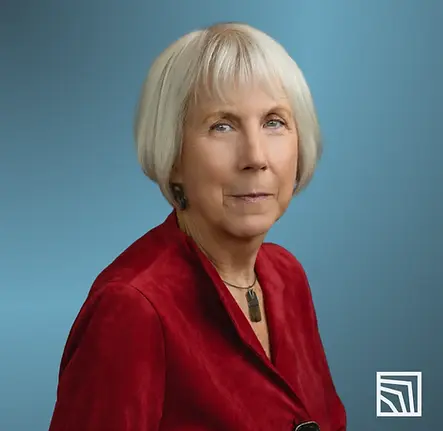
Amid the challenges described throughout this work, the author also holds a deep sense of hope for the future of psychedelic medicine—grounded in the presence of leaders who embody ethical study, practice, and research. Reid Robison, MD, and Steve Thayer, PhD, stand at the forefront of that hope. The author came into contact with them through what she describes as a series of unusual synchronicities, culminating in a Zoom call with Dr. Robison in December 2020. From that point forward, both Dr. Robison and Dr. Thayer became ongoing sources of guidance and support through their Psychedelic Therapy Frontiers podcast, responding to her questions and engaging with her correspondence over the course of nearly five years. During a period marked by complexity and uncertainty, their willingness to engage thoughtfully and consistently provided meaningful grounding, for which the author remains deeply grateful.
Noel Gardner MD, a Jungian forensic psychologist, trusted guide, and psychedelic sage played a pivotal role during one of the author’s most difficult periods of psychological struggle. His willingness to listen and to take her experience seriously, even when others did not, was experienced as profoundly stabilizing. The author expresses enduring gratitude for his steadiness and belief during that time.
Rick Doblin, PhD, represents for the author a model of principled leadership within the broader psychedelic movement. Meeting him in June 2022 was experienced as both unexpected and meaningful. The author recalls his encouragement and support following her clearance by the Utah Division of Professional Licensing and reflects on his longstanding commitment to advancing the field through both research and advocacy. She notes that there could be no greater mentor in Psychedelic Nonviolent Resistance than him and she is grateful to have learned from his training program.
Annie Mithoefer, BSN, and Michael Mithoefer, MD, also left a lasting impression through their teaching during the June 2022 MDMA-assisted therapy for PTSD training at the California Institute of Integral Studies Certificate Program in Psychedelic Therapies and Research. The author recalls Annie’s effortless, beatnik-style snapping in response to one of her reflections during the training—a small but meaningful moment of affirmation. She also recalls a deeply personal interaction with Dr. Mithoefer, who, while listening to her share difficult aspects of her story, held her hand and expressed that she was not at all what others had suggested. Though these moments were brief, they carried a lasting sense of validation, compassion, and humanity that has remained with her.
Finally, the author expresses deep appreciation for Janis Phelps, PhD, for her inclusion in the CIIS CPTR training cohort. She reflects not only on Dr. Phelps’ emphasis on integrity and ethical responsibility, but also on her guidance in helping the author understand what it means to be a whistleblower. The author is especially grateful for Dr. Phelps’ reminder that she was not alone—that her ancestors, were guiding her through this process.
Together, these individuals represent for the author a vision of what psychedelic medicine can become when grounded in ethics, humility, and care. Their influence serves as a reminder that even within systems marked by challenge, there remain individuals committed to healing, truth, and the responsible advancement of this work. Thank you for carrying me through.
The Unexpected Guides of Our Narrative


Psychiatrist & Pioneer in Psychedelic Psychiatry; Founder Psychedelic Therapy Frontiers Podcast




Disclaimer
Content on Psychedelic Ethics Review reflects the author’s perspectives and is for informational purposes only. Some statements describe alleged events based on personal accounts and available information and have not been proven in a court of law unless stated otherwise.
Under U.S. law, all individuals are presumed innocent unless proven otherwise in a court of law. Allegations of this nature can be difficult to substantiate without corroborating evidence or testimony, and individuals may choose not to provide statements or may deny such claims.
This site does not provide medical or legal advice. Content is shared in good faith to support discussion of ethics, accountability, and safety.